
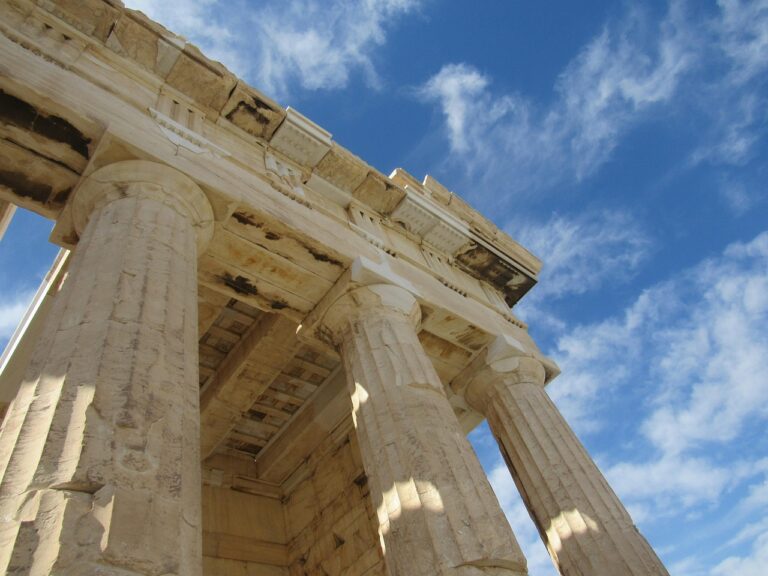
Photo by Endriago & Pixabay
When we think about mediation, we often imagine a modern practice, something connected to contemporary education, conflict resolution, or community projects. In reality, mediation is far older than we might expect. Long before the term existed, ancient societies had already developed ways to manage conflict, facilitate dialogue, and help people with different perspectives coexist.
Dialogue as a Foundation of Public Life
In ancient Greece, public life was deeply rooted in dialogue. Spaces like the agora were not only places for commerce or political speeches, but also environments where disagreement was normal and expected. In these contexts, respected figures such as elders, community representatives, or skilled speakers often played an informal mediating role. They helped structure discussions, slow down escalating tensions, and ensure that different voices could be heard. The aim was rarely to reach full agreement, but rather to allow the community to continue functioning despite differences.
Mediation in Everyday Roman Society
Ancient Rome also offers interesting examples of mediation embedded in everyday life. Before disputes reached formal courts, it was common for intermediaries to step in. These individuals did not act as judges, but as facilitators who relied on persuasion, social authority, and practical compromise. Mediation was seen as a way to preserve relationships and social stability, not simply to determine who was right or wrong.
Restoring Balance, Not Assigning Blame
Similar practices can be found far beyond the Mediterranean world. In many ancient and Indigenous societies, councils of elders played a central role in resolving disputes. These gatherings often focused on restoring balance within the community rather than assigning blame. Storytelling, shared memory, and collective values were used as tools to reconnect people and rebuild trust. In this sense, mediation was as much a cultural practice as a practical one.

Photo by Stocksnap & Pixabay
Why Ancient Practices Still Feel Familiar
What is striking is how familiar these approaches feel today. Despite differences in context and scale, ancient mediation relied on principles that remain relevant: listening, patience, respect for multiple perspectives, and attention to social relationships. Mediation was not about quick solutions, but about sustaining dialogue over time.
What the Past Can Teach Today’s Mediators
This historical perspective can offer valuable insights for contemporary heritage mediation, especially when working with young people. Today’s mediators often deal with contested narratives, sensitive histories, and diverse audiences. Looking back reminds us that complexity and disagreement are not problems to eliminate, but realities to work with.
Mediation as a Shared Human Heritage
Understanding mediation as a practice rooted in human history helps us see it differently. It is not a recent invention or a technical tool, but a shared heritage in itself — one that has evolved across cultures and centuries. By learning from ancient forms of mediation, we can approach present-day challenges with greater awareness, humility, and creativity.