
Text: Wenanjcusz Ochmann
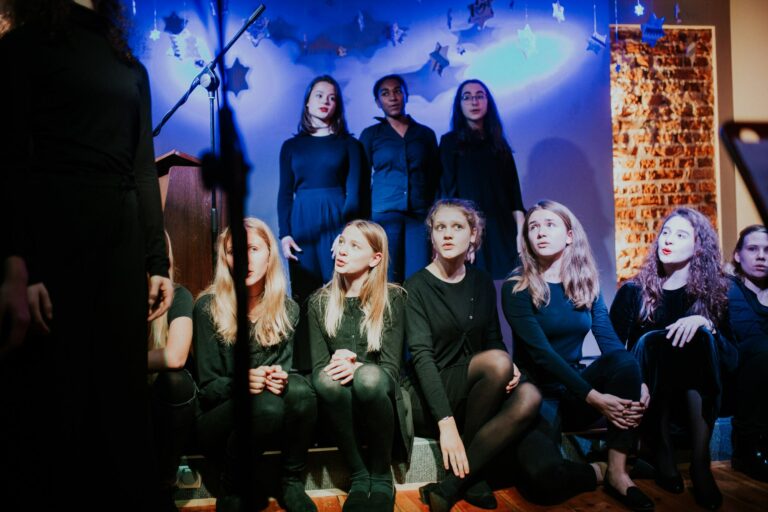
PHOTO: Final concert of the workshops, ARTeria Foundation archives
‘It was a meeting of two worlds, both musically and culturally.
This was also the idea behind the workshops organised jointly by young musicians from the Mädchenchor der Sing-Akademie zu Berlin and the VENOS STUDIO Private Music School in Zabrze.
There was a lot of laughter, curiosity and questions such as >>What is Berlin like?>>, >>What do you like about Zabrze?<<, >>What is a typical Silesian dish?<< and >>What kind of music do you listen to?<<. The joint workshops, conversations, concert preparations and performance became an opportunity for cultural exchange – discovering differences, but also appreciating what we have in common.
While thinking about the idea for this article, I remembered not only the musical meeting…’
We live in culture. Literally. Culture directly influences our set of values, norms, beliefs and behaviour patterns. How we greet each other, what we eat, how we dress. It influences our style of communication and how we express our emotions. Culture shapes the way we perceive the world, our attitude towards authority and social relations (Hofstede, 2011), and these differences become particularly apparent when working with people from different cultural backgrounds.
In an increasingly globalised world, connected by mobility and digital communication, encounters between people from different cultures are becoming commonplace, and differences in communication styles, values and customs can lead to misunderstandings. In public debate, there is often a belief that cultural differences are in themselves a source of tension and lead to conflict, and that the OTHER is a threat. However, research in the field of intercultural communication shows that the problem usually does not stem from the differences themselves, but from communication misunderstandings and stereotypes, i.e. a lack of the skills needed to understand and interpret them. Different communication styles, ways of expressing opinions or approaches to time can lead to misinterpretations of other people’s behaviour (Berry, 2002; Hofstede, 2011).
Intercultural communication and its practical application, i.e. mediation, concern precisely such interactions, i.e. situations in which people from different cultural contexts try to achieve common goals and understand each other. In this process, a key role is played by what is known as intercultural competence, which can be defined as the ability to cooperate effectively and respectfully with people from other cultures: knowledge of cultural differences, openness to other perspectives, and communication skills such as active listening and interpreting behaviour in a cultural context.
For example: some cultures value direct communication, where opinions are expressed clearly and openly. In others, indirect communication is more important, avoiding direct criticism and confrontation. When people with such different communication styles work together, one may find the other too critical, while the other may find the first one not engaged enough. Similar misunderstandings can affect virtually every aspect of cooperation: from decision-making, to relationships with authority figures, to the importance of punctuality. But does this always have to end in conflict?
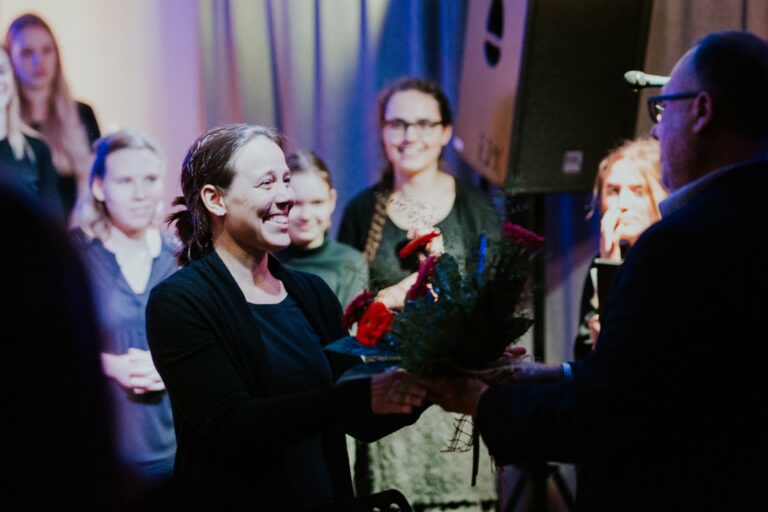
PHOTO: Final concert of the workshops, ARTeria Foundation archives
One of the tools that can help in dealing with such situations is intercultural mediation. In literature, it is defined as a process of supporting communication and mutual understanding between individuals or groups from different cultures, and research shows that intercultural mediation – as an important element of building social integration in diverse societies – enables the negotiation of cultural identity, the strengthening of mutual respect and the development of dialogue between different social groups (Karanikola and Panagiotopoulos, 2025). Researchers also point out that developing intercultural competence helps to reduce stereotypes and improves the quality of communication in multicultural environments.
It is very important that people who are not professional mediators can also act as mediators. According to contemporary research, people who are able to facilitate conversation and help others understand different perspectives are characterised by competencies that include three basic elements: knowledge, attitudes and skills (Deardorff, 2009).
The first of these elements is knowledge of cultural differences and awareness that one’s own perception of the world is not universal. The second basic element is attitude, i.e. openness, curiosity and willingness to learn from others. The third is communication skills that allow one to interpret behaviour in a cultural context and adapt one’s own actions to a given situation. These elements enable true intercultural dialogue, i.e. an open conversation between people from different cultures who are aware of the differences between them and try to understand them, with the aim not of eliminating these differences but of building mutual understanding and cooperation.
But the principles of intercultural dialogue are useful in any situation – not only when we meet or work with people from other cultural circles. It is always worth asking questions instead of making judgements, actively listening to others, reflecting on your own cultural assumptions, and seeking common values and goals. This approach is particularly important in educational environments and youth projects, where people from different backgrounds, with different cultural and social capital and different experiences, come together.
The development of intercultural competences promotes the building of more open and inclusive societies and increases the ability of young people to work in an international environment (Bennett, 2015). In an increasingly culturally diverse world, the ability to engage in intercultural dialogue is becoming one of the key competences that allows differences between us to become a source of knowledge, inspiration and new perspectives.
‘Instead of a conclusion, I invite you to a short report from the concert ending the music workshops with the participation of young people from the Mädchenchor der Sing-Akademie zu Berlin conducted by Friederike Stahmer and young artists from the VENOS STUDIO Private Music School in Zabrze: Agata Kornacka – piano, Sebastian Býma – guitar, vocals, and Anna Bzdura – vocals. Collaboration: Cornelia Schlemmer and Wenancjusz Ochmann. Co-organisation: ARTeria Foundation’.
Bibliography:
Bennett, J.M. (2015) The SAGE Encyclopedia of Intercultural Competence. Thousand Oaks: Sage.
Berry, J. W., Poortinga, Y. H., Segall, M. H., & Dasen, P. R. (2002) ‘Cross-cultural psychology and intercultural relations’.
Deardorff, D. (2009) The Sage Handbook of Intercultural Competence. Thousand Oaks: Sage.
Hofstede, G. (2011) Dimensionalising Cultures: The Hofstede Model in Context.
Karanikola, Z. and Panagiotopoulos, G. (2025) ‘Identity Negotiation and Conflict Resolution in Contemporary Multicultural Settings: The Contribution of Intercultural Mediators’.