© Malakos Museum
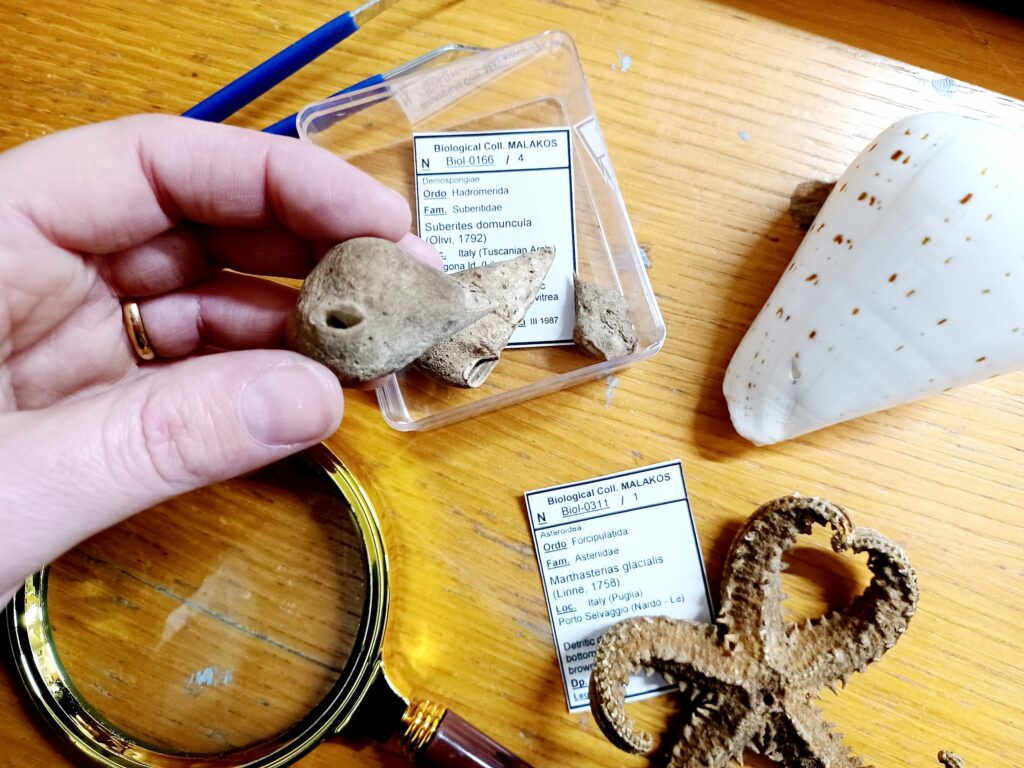
Imagine a group of people standing in front of the same object in a museum. A historian notices the craftsmanship and immediately connects it to a specific historical period. A child says it looks like a spaceship. Someone else remembers seeing a similar object in their grandmother’s house. Another visitor wonders how it was made and who might have used it.
Who is right? At first glance, it may seem obvious that the historian has the “correct” answer. After all, cultural heritage is supported by research, historical evidence, and scientific knowledge. But cultural mediation invites us to look at the situation differently. While facts provide an essential foundation, they are only one part of the experience. Every person brings their own memories, emotions, questions, and cultural background, shaping the way they connect with heritage.
From transferring knowledge to co-creating experience
For many years, museums and cultural institutions focused primarily on transmitting information. Visitors were expected to observe quietly while experts explained the significance of objects, artworks, or places. This approach undoubtedly increased knowledge, but it often left little room for dialogue or personal engagement.
Today, cultural mediation is increasingly moving towards participation. Rather than asking, “How can we explain this object?”, facilitators ask, “How can we help people connect with this object?” This shift may seem subtle, but it completely changes the visitor’s experience. Instead of being passive listeners, people become active participants in interpreting cultural heritage.
Facts are the beginning, not the end
This does not mean that facts no longer matter. Quite the opposite. Good cultural mediation is built on accurate information, but it recognises that facts alone rarely create lasting memories. What people often remember is the conversation they had, the question that challenged them, or the personal connection they discovered.
Consider a simple example. A museum guide shows visitors an ancient ceramic bowl. One approach is to explain where it was found, its age, and the techniques used to produce it. These details are important and provide historical context. A different approach begins by asking visitors, “What do you think this object was used for?” or “What does it remind you of?” The discussion may reveal surprising ideas before the historical explanation is introduced. Rather than replacing factual information, these questions prepare visitors to engage with it more deeply.
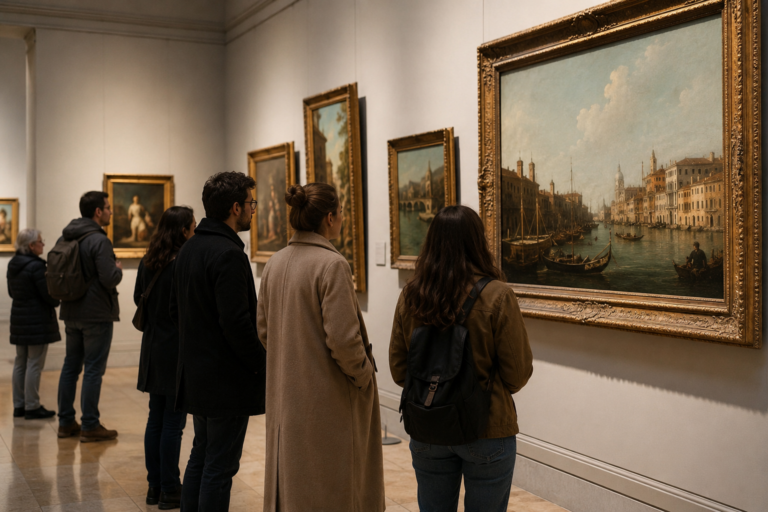
Image AI-generated
One place – Many Perspectives
The same principle can be applied outside museums. Imagine a walk through a historic neighbourhood. A traditional guided tour might focus on architectural styles, dates, and famous events. A cultural mediation activity, however, might invite participants to think about how the space is used today. Who spends time there? Which stories are visible, and which remain hidden? How might the same street look different through the eyes of a child, a long-term resident, or someone visiting for the first time? Suddenly, the place becomes more than a collection of buildings. It becomes a space shaped by many different experiences.
Natural heritage offers another interesting example. During a walk in a forest, participants may stop to observe an old tree. A biologist might explain its ecological role, the species it belongs to, and its importance for local biodiversity. At the same time, someone else may see it as a symbol of resilience, while another participant may remember climbing similar trees during childhood. None of these reflections diminish the scientific explanation. Instead, they enrich the experience by connecting knowledge with personal meaning.
Facilitator's new role
This perspective also changes the role of the facilitator. Instead of acting as the person who provides all the answers, the facilitator becomes someone who encourages curiosity, creates opportunities for dialogue, and helps participants feel confident enough to share their own ideas. Sometimes this means asking open questions instead of giving immediate explanations. Sometimes it means allowing silence while people observe. At other times, it means accepting that two people may reach different conclusions without one needing to be “wrong.”
Between facts and personal meaning
This approach can feel unfamiliar, particularly for facilitators who are used to being seen as experts. It is natural to want to provide the correct answer straight away. However, cultural mediation reminds us that learning is often stronger when people are given the opportunity to explore before they are told. Questions encourage observation. Discussion encourages reflection. Shared experiences encourage empathy.
Of course, not every interpretation is equally accurate when it comes to historical facts or scientific evidence. Cultural mediation does not suggest that evidence should be ignored or replaced by opinion. Rather, it invites facilitators to distinguish between factual accuracy and personal meaning. A visitor may not correctly identify the purpose of an archaeological object, but their reflections can still reveal meaningful connections that enrich the conversation. The facilitator’s role is to guide the group towards reliable knowledge while leaving room for personal engagement.
Heritage belongs to us all
Perhaps this is one of the greatest strengths of cultural mediation. It recognises that heritage belongs to everyone, not because everyone knows the same facts, but because everyone has the capacity to connect with it. When different perspectives are welcomed, cultural heritage becomes a meeting place where knowledge, memories, emotions, and experiences come together.
In the end, the goal of cultural mediation is not to replace one interpretation with another. It is to create encounters that encourage people to observe more carefully, think more deeply, and appreciate that culture is something we not only inherit, but also continue to interpret and shape together.